
And why now is the time to be prepared.
The face of search engines has changed. For twenty years, everyone talked about Google ranking. Today, another type of tool is beginning to overshadow the classic engines: conversational AIs such as ChatGPT, Perplexity, Gemini, Copilot or Claude.
They don't just display links: they react. They reformulate, summarize and select what they consider reliable.
But then, why doesn't the name of your company, your site, your work appear when you ask these AIs a question?
AIs don't "read" the web like Google
Search engines like Google crawl billions of pages using robots called crawlers. AIs, on the other hand, don't crawl everything: they rely on limited, filtered and selected databases, often made up of articles, official sites, encyclopedias, blogs and the like.
If your site is not visible, well structured and regularly updated, it doesn't exist for these AIs.
Some AIs, such as ChatGPT or Perplexity, make occasional use of search tools, but they favor "safe", stable sources: recognized sites, media, institutions, Wikipedia, etc.
Reliability before quantity
Unlike Google, AIs don't display 100,000 results: they look for the most credible answer.
They analyze:
- Text clarity (simple, well-structured sentences)
- Regularity of updates
- Absence of technical errors
- Site reputation (incoming links, mentions elsewhere)
- The tone: neutral, informative, non-advertising
A poorly maintained, sluggish, homemade site with mistakes, broken links or empty pages is therefore ignored. Not because it's "bad", but because it doesn't reassure the AI algorithms.
AIs already discover your site (even a little)
Modern analysis tools show that a small percentage of traffic already comes from AIs and indexing bots.
Typical example of a month on a professional site:
- 37% via direct links
- 45% via search engines (Google, Bing, Qwant, etc.)
- 8% via social networks
- 6% via AI and intelligent bots (ChatGPT, Perplexity, Gemini, Claude, Copilot...)
- 4% via backlinks (sites that talk about you)
It's still not much, but it's growing fast: these "new visitors" don't come to read your pages, they analyze them, interpret them and use them to formulate their answers.
What this means in practice
Not being "read" by AIs today is a bit like not being found by Google in 2003: you can get away with it, but not for long. Especially since the conversion rate via AI is 4 times higher.
The next generation of AIs will go straight to the source - your pages, your products, your services - and only companies that are structured, fast and clear will be integrated into their models.
The future of search engine optimization isn't just Google. It's also about how AIs understand and integrate your content.
How to make yourself visible to AIs
There's no need to start from scratch: it's all about making your site readable to an intelligent machine. Here are the key points:
- Pay particular attention to headings, subheadings and text clarity.
- Update your content regularly.
- Avoid advertising or hollow language.
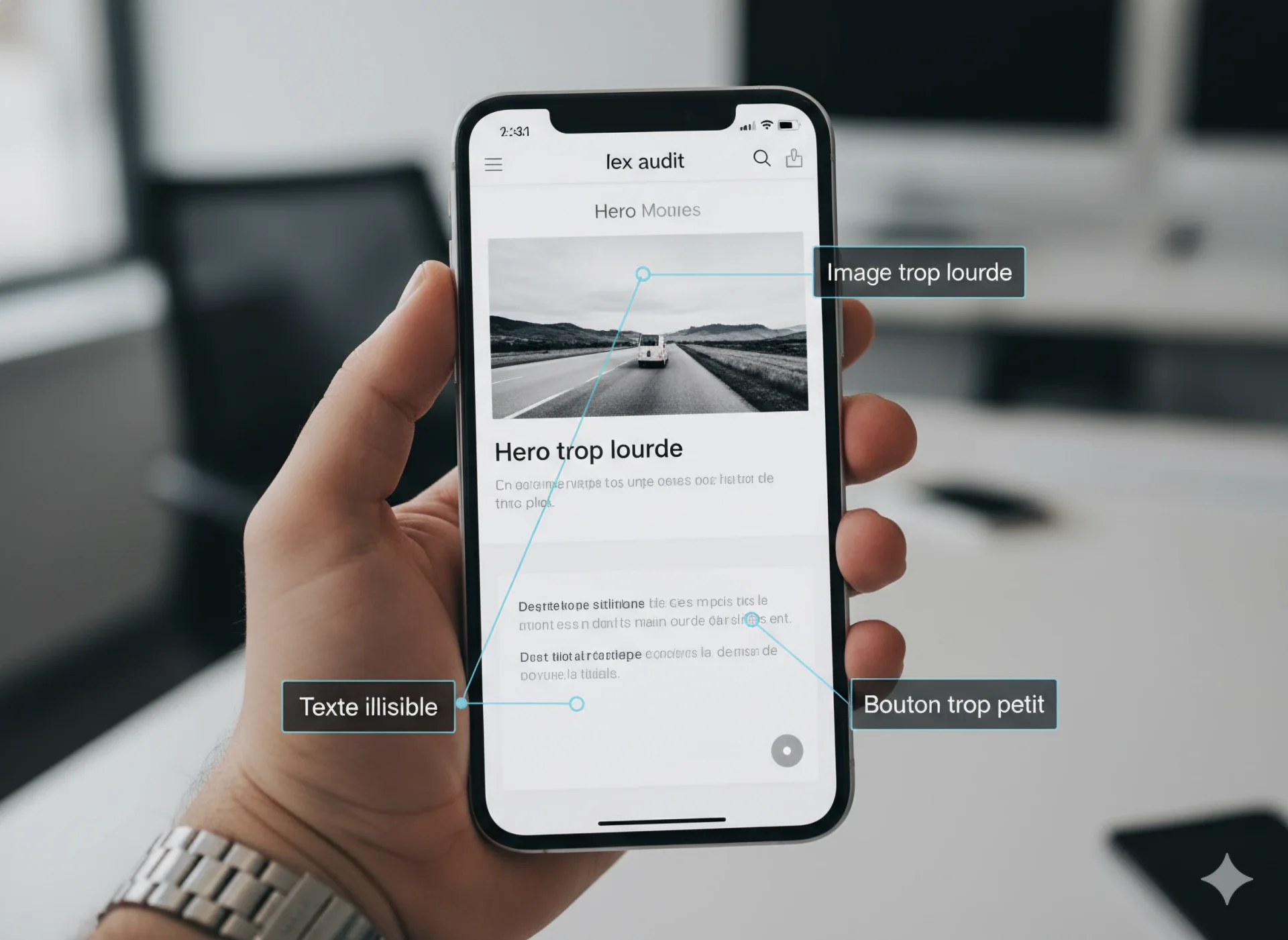
- Optimize speed, especially on mobile.
- Add a clear site map and well-linked pages.
- Use simple, explicit words.
AIs prefer structure and consistency to marketing.
In conclusion
AIs don't ignore you out of malice: they just don't have anything useful or clear to read about your site. They don't differentiate between a plumber, a photographer or a small business - they value content quality, speed and technical reliability.
And this is exactly where an analysis tool like Webful becomes valuable: it shows you concretely how your site is perceived - by humans, by Google and, from now on, by AIs.
Webful supports you
Webful helps you track the share of your traffic coming from AIs (ChatGPT, Perplexity, Gemini, etc.) and understand how to make your site readable by these new intelligence engines.