
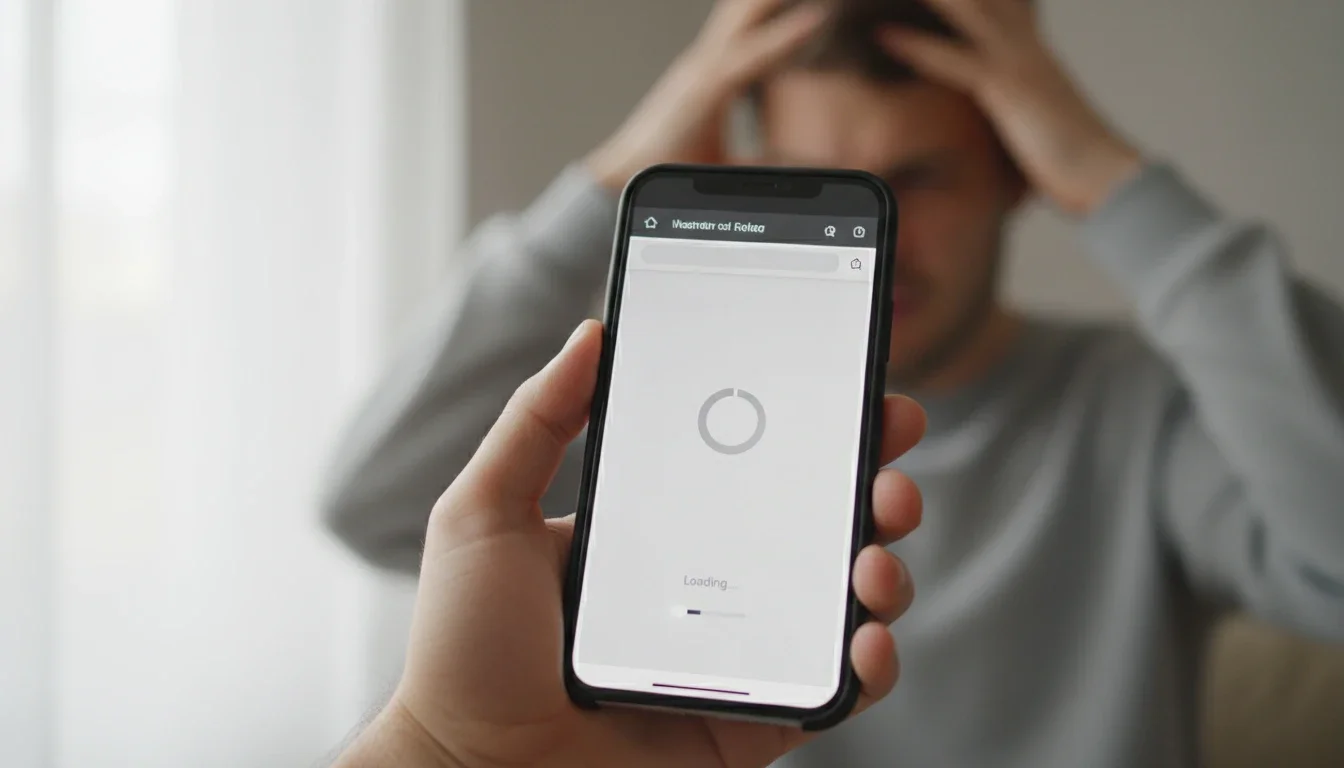
On desktop, a slow site is annoying. On mobile, it's a deal-breaker. With 70% of traffic now coming from smartphones and visitors leaving after just 3 seconds, every speed issue translates directly into lost revenue.
The numbers speak for themselves
Whether your visitor is on desktop or mobile, speed matters:
- 53% of visitors leave after 3 seconds
- 90% leave after 5 seconds
- Every second of delay reduces contact requests by 7%
Today, 70% of your traffic comes from mobile. This is where slowness causes the most damage, and where it's least well managed.
Why mobile is more critical
On desktop, your site looks fine: stable connection, large screen, powerful processor. On mobile, everything changes.
On desktop: slow-loading images, jerky animations, sluggish pages.
On mobile: blurry logo for several seconds, images blocking the entire screen, invisible contact button, Google Maps not loading, pages that jump, skip, or stay blank, video headers consuming all bandwidth. Result: the visitor leaves immediately.
Most sites were designed for desktop first, then "adapted" for mobile. It should be the other way around.
Real-world examples
The freelance graphic designer: Portfolio with 12 full-size HD images. On desktop: 2 seconds. On 4G mobile: 8 seconds. Prospects searching for "logo designer" never see the pricing page.
The home care nursing practice: 90% of traffic is mobile, often urgent calls. The service area page takes 6 seconds to load. The phone number isn't clickable. Every day, calls go to competitors.
The event photographer: Homepage with HD background video. On desktop: nice but slow. On mobile: 12 seconds before anything appears. Potential clients don't wait.
The B2B consultant: LinkedIn profile links to their site. On desktop: 2 seconds. On mobile: 5 seconds. Decision-makers often browse on smartphones. A slow mobile site signals lack of professionalism.
The lawyer or therapist: Site loaded with plugins (calendar, forms, chat, newsletter). On desktop, it works fine. On mobile, each plugin slows loading. Appointment requests drop.
The main causes of slowness
- Heavy images: Uncompressed photos, old formats (JPEG, PNG) instead of modern formats (WebP, AVIF). A 2 MB photo that could be 200 KB.
- Desktop-first design: The site was built for large screens, then adapted for mobile. Stylesheets load the desktop version first, then try to adjust. It should be the opposite.
- Background videos: Hero videos are heavy. On mobile, they consume bandwidth and block everything else from loading.
- Too many scripts and plugins: Each module adds weight: share buttons, widgets, sliders, animations. On mobile, it all adds up.
- Inadequate hosting: Servers saturated at peak times. On mobile with variable connections, everything gets worse.
Calculating your losses
For a freelancer or small business:
- 400 monthly visits
- 280 mobile visits (70%)
- Site takes 4 seconds on mobile
- 53% abandonment = 148 mobile visitors lost
With a 2-5% conversion rate: 3 to 7 customers lost per month on mobile alone, or 36 to 84 customers per year. Adding desktop losses (smaller but real), you easily reach 50 to 100 customers lost per year due to slowness.
What a fast site changes
- Pages display before visitors lose patience
- Phone number immediately visible and clickable on mobile
- Services understood, quote requests simplified
- High-value pages (reviews, testimonials) actually get viewed
- Better Google ranking, especially on mobile
How to fix these issues
- Switch to modern formats: WebP or AVIF are 5 to 10 times lighter than JPEG. All modern browsers support them.
- Adopt mobile-first: Design for mobile first, then enhance for desktop. CSS loads in the right order.
- Remove videos on mobile: Or replace them with a static image. Video can stay on desktop.
- Reduce plugins: Each removed module speeds up the site. Keep only what's essential.
- Test on a real smartphone: Not on your computer. On your phone, on 4G, where your customers actually browse.
- Monitor speed: Catching slowdowns early limits losses. Analytics tools identify problem pages.
In summary
Slowness costs customers. On desktop, it's a nuisance. On mobile, it's a serious loss.
With 70% of traffic on mobile and visitors abandoning after 3 seconds, every technical problem becomes lost revenue.
A fast site across all devices means more visitors who stay, more inquiries that come through, more conversions.
Webful measures your site's speed on both mobile and desktop. Reports identify slow pages and explain what's hurting your conversions.
Stop losing customers to a slow site. Measure, understand, fix.